
Introduction
Fire safety is important for every building, whether it is a home, office, factory, or public space. To make buildings safe, the National Fire Protection Association (NFPA) creates rules that guide how fire systems should be designed and installed. These standards started in the United States, but today they are trusted and used across the world. Because of this, NFPA is seen as the global leader in fire-safety guidelines.
NFPA standards include more than 300 codes. Each code gives clear rules for fire systems like alarms, sprinklers, fire pumps, hoses, escape routes, and emergency communication systems. In simple words, NFPA standards make sure buildings are safe and ready to handle fire emergencies.
Why NFPA Standards Matter
NFPA standards help designers, engineers, contractors, and safety teams follow the same steps for fire safety. As a result, systems become more reliable and approved by civil defense authorities. Also, NFPA rules reduce the chance of mistakes during installation and maintenance. This leads to safer buildings and smoother emergency planning.
When buildings follow NFPA standards, they get benefits like:
- Safer fire-protection systems
- Easy approval from authorities
- Better emergency readiness
- Clear rules for alarms and sprinklers
- Lower risk during fire situations
In addition, NFPA rules help protect lives and valuable property. This makes them important for hospitals, malls, schools, industries, and residential buildings.
Main NFPA Codes Used in UAE & India
| NFPA Code | Purpose |
|---|---|
| NFPA 13 | Sprinkler installation |
| NFPA 14 | Standpipe and hose systems |
| NFPA 20 | Fire pump setup |
| NFPA 24 | Water supply installation |
| NFPA 72 | Fire alarm and signaling |
| NFPA 101 | Life-safety and escape routes |
Our Commitment
When organizations implement NFPA standards, they benefit from:
- Enhanced life safety and fire-protection reliability
- Uniform system design and installation practices
- Better inspection and maintenance procedures
- Improved regulatory and international compliance
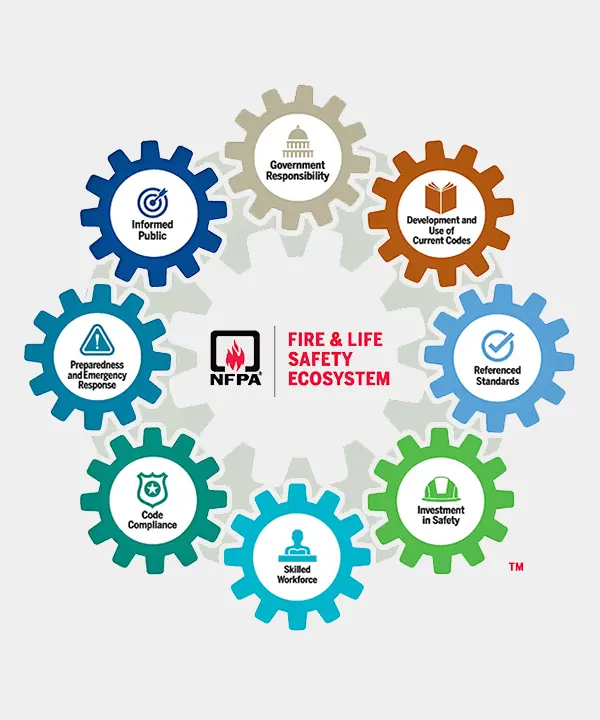
Furthermore, NFPA standards clearly define requirements for fire alarms, sprinklers, hydrants, pumps, exit routes, and emergency communication systems. Consequently, buildings become safer, evacuation becomes easier, and emergency response becomes more effective.
These standards, similarly, are mandatory across several regions and industries, ensuring consistent fire-safety performance.
Conclusion
Compliance with NFPA standards ensures trust, safety, efficiency, and long-term peace of mind. They are not just regulatory requirements — they represent a commitment to saving lives and ensuring world-class fire protection infrastructure.
At Minimech General Trading L.L.C, we strictly follow NFPA guidelines in design, engineering, product selection, installation, and commissioning. Our mission is to deliver certified, reliable, and globally compliant fire-protection solutions for every project — from residential towers to industrial facilities.
Protecting people, property, and infrastructure — the NFPA way.
Find all about fire equipments in https://minimech.ae/
Know more about NFPA https://www.nfpa.org/